"Is it getting harder?" is the most reliable complaint in daily word games. It comes round every few months, usually after a run of two or three awkward answers, and the interesting part is that it is partly true and mostly about something else.
The part that is real
A daily puzzle with a human curator will drift. Once a few hundred everyday words have been used, the obvious ones are gone — you cannot run CRANE twice — and what is left skews towards words that are slightly less common by definition. That is arithmetic, not malice, and it happens to every daily puzzle that does not repeat itself.
Editorial taste drifts too. A curator who has watched people solve four hundred puzzles has a different sense of "fair" from one who has watched forty.
The parts that only feel real
Streaks change the stakes. A word that would have been a shrug on day three is agonising on day three hundred, because there is something to lose. Nothing about the word changed.
You remember the bad ones. Nobody posts about the day the answer was TRAIN. A run of two hard words in a week reads as a trend; a run of two easy ones reads as nothing.
You got better, so the easy ones stopped counting. As you improve, the puzzles you solve in three stop registering as puzzles at all. What is left in memory is the ones that took five or six, which is the same slice of the distribution it always was.
What makes a word actually hard
Difficulty is not obscurity. The words that ruin people are usually common ones with an awkward shape:
- Repeated letters. LEVEL, ERROR, SPEED. Guess one letter twice and the board only marks it as many times as the answer holds — which reads as a contradiction until you know the rule.
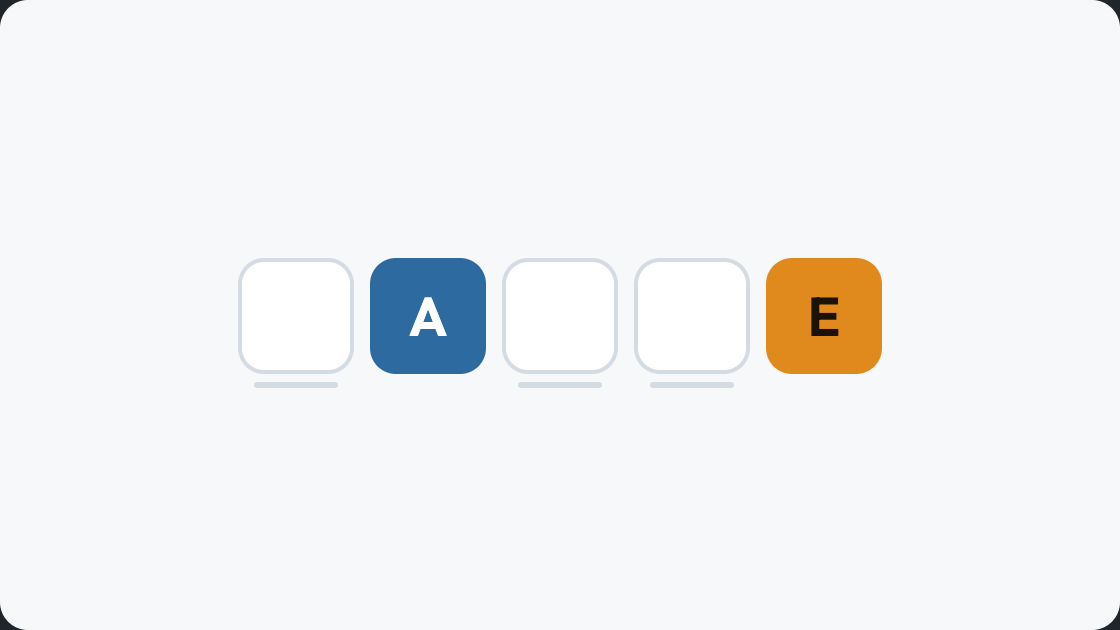
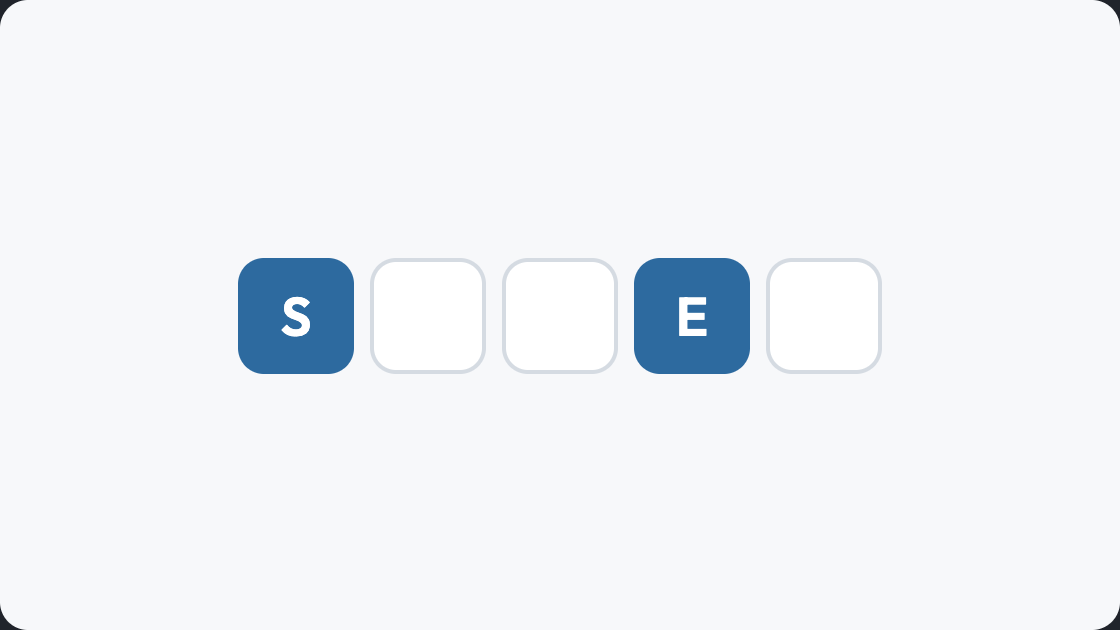
- Shared endings. _IGHT gives you EIGHT, FIGHT, LIGHT, MIGHT, NIGHT, RIGHT, SIGHT, TIGHT. Four letters placed and six words left is the worst position on the board.
- One rare letter in an ordinary word. JOKER and WALTZ are everyday words that almost nobody opens with.
What we do about it here
Every answer carries a difficulty grade, derived from how common the word actually is in ordinary writing rather than from anybody's instinct. The calendar draws from a shuffled bag rather than sorting, so a week holds a mix instead of a fortnight of easy ones followed by a wall — and the grade is shown on the board before you start, so a hard day is a hard day you were told about.
If you want the hard ones deliberately, unlimited goes up to eleven letters. If you want the opposite, the shorter lengths are genuinely gentler.