Is it a real word?
Which letter is missing?
This device cannot read the words aloud, and these words have no picture yet — so there is no way to tell you which word to build.
Try First Sounds InsteadPhonics
Phonics games, one sound at a time
Free phonics games online for children learning to read: sound out CVC words one letter at a time. Phase 2 phonics practice with real three-letter words, no account and nothing to install.
How the Phonics Games Work
-
You Always Know Which Word
A three-letter word appears with one letter taken out, and the word is read aloud. Words that have a picture show it too. That is the part most versions of this leave out, and without it the game is not phonics at all — a gap with four letters under it and no idea what you are building is a spelling puzzle, not sounding out.
-
Pick the Sound You Are Working On
First sound, middle sound or last sound. They are three different skills and they get taught separately, so they are three separate games here rather than one that moves the gap around on its own. Middle sounds are the hardest and the ones that matter most.
-
Or Just Read It — Is It Real?
The fourth mode shows a whole word and asks whether it is one. Half of them are made up: PEK, VAB, KUM. They are real words with one letter changed, so they can still be sounded out — which is the point, because blending a word you have not been told is the skill phase 2 is actually for. Nothing is read aloud until you answer, since reading it is the exercise.
-
One Vowel at a Time
Short a, then short e, then short i, o and u — the order every phonics scheme uses. If your child is on short a this week, set it to short a. There are 24 short-a words, and between 12 and 16 in each of the others.
-
Only Real CVC Words
Every word here is a true consonant-vowel-consonant word: CAT, PEG, SUN, BOX. Words like BOY, COW, DAY and CAR look the same shape and are not CVC — OY, OW and AY are two letters making one sound, and the R in CAR changes the vowel. Asking a child to sound those out letter by letter teaches something that is wrong, so these cvc word games leave them out.
-
The Wrong Answers Cannot Be Right
Hide the C in CAT and offer B, H and R, and every one of them makes a word — BAT, HAT, RAT — so a child who reads correctly is marked wrong. Every letter offered is checked against the dictionary in the slot it would fill. Where that is not possible, the round only appears if there is a picture or a voice to say which word it is.
-
A Wrong Answer Is Not a Dead End
Picking the wrong letter does not end the round or move you on. That letter greys out, the word is read again, and the rest stay live until it is right. The score only counts the ones your child got first time, so it measures something without ever standing in the way.
-
The Words Match Your Spelling
The pool comes from the dictionary you pick at the top of the page, so a child learning to read in Britain is not handed an American word list. It is the same dictionary the rest of the site runs on, and every word in it is one a five to ten year old actually meets.
More word games for kids
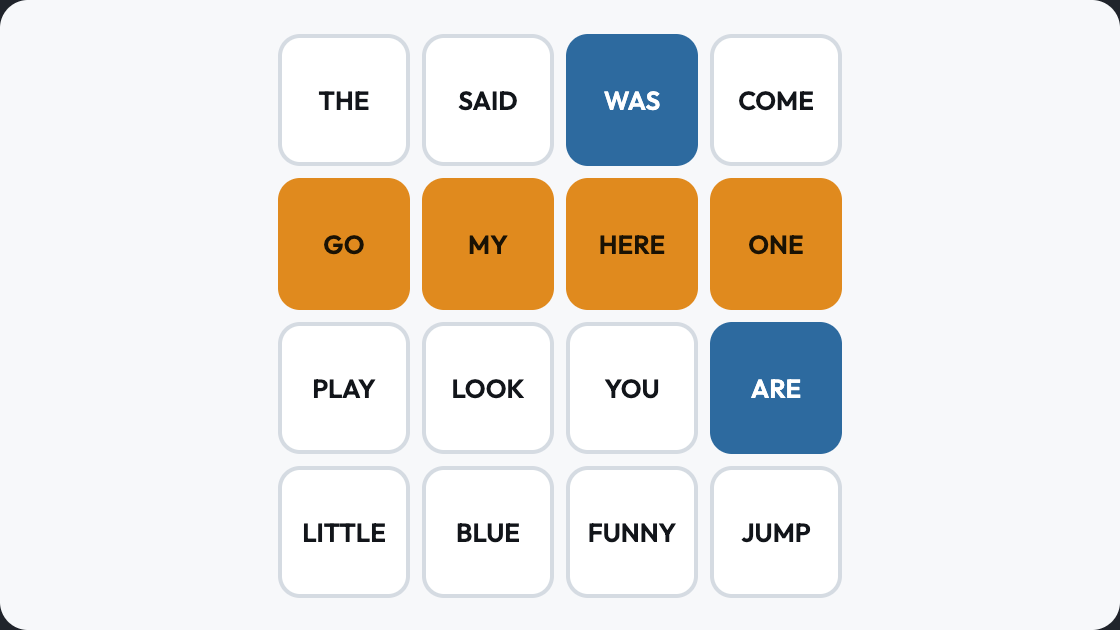 Sight Word Games
Sight word bingo on a four by four card: a word is called and your child finds it. Built on the Dolch sight words schools have set since 1936, for the words that cannot be sounded out.
Sight Word Games
Sight word bingo on a four by four card: a word is called and your child finds it. Built on the Dolch sight words schools have set since 1936, for the words that cannot be sounded out.
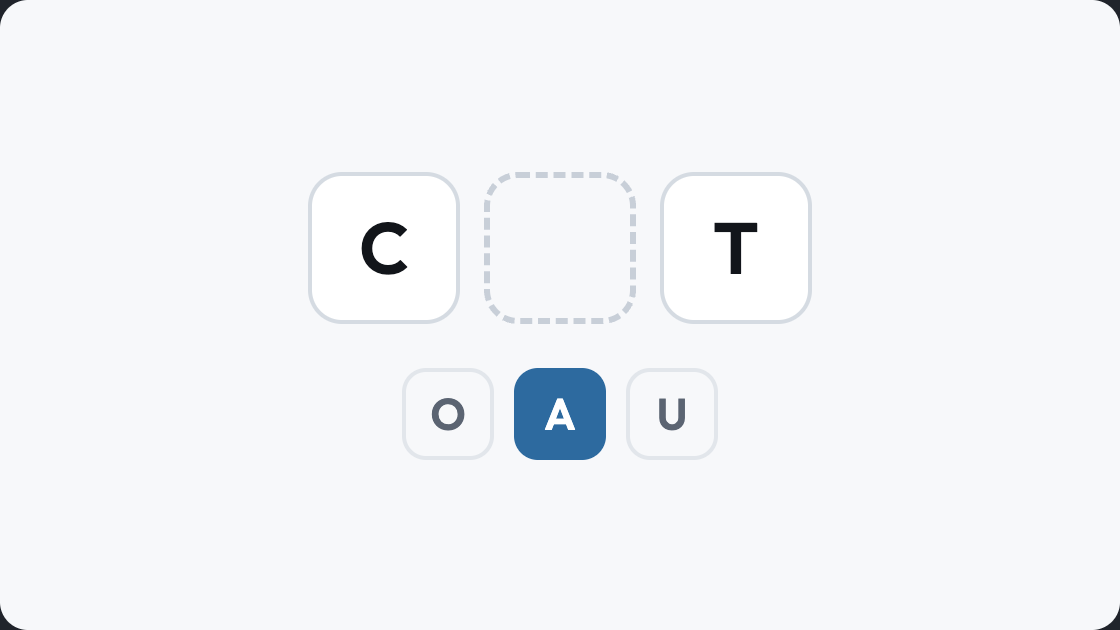 Phonics Games
Phonics games for children learning to read: sound out CVC words one letter at a time, with the missing sound to find. Phonics practice for kids that speaks the word aloud.
Phonics Games
Phonics games for children learning to read: sound out CVC words one letter at a time, with the missing sound to find. Phonics practice for kids that speaks the word aloud.
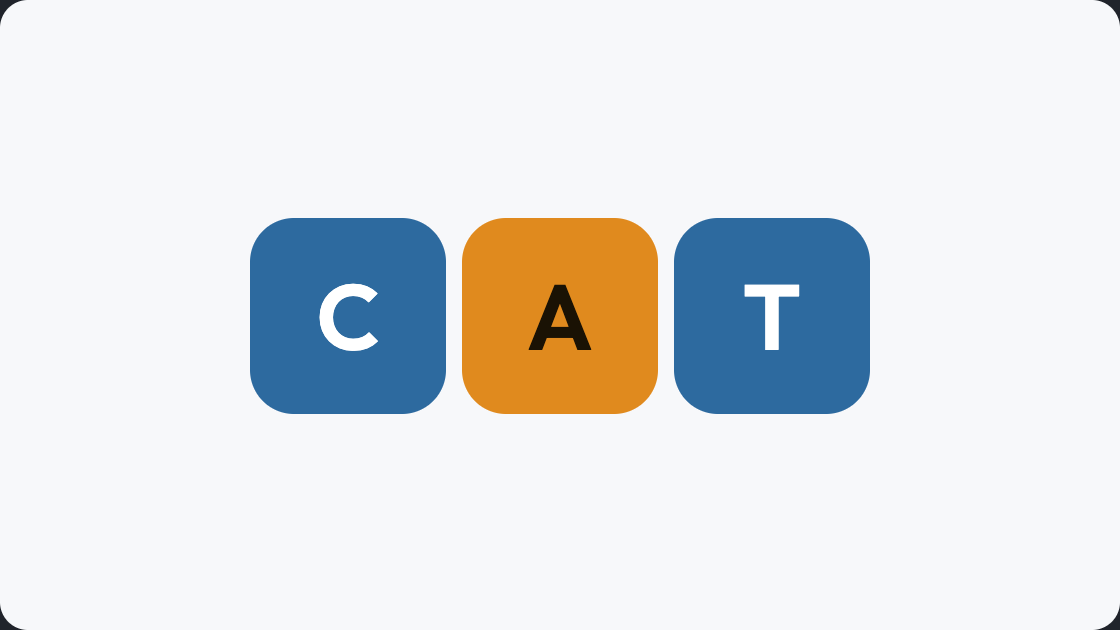 Wordle for Kids
Wordle for kids, age-banded for five to thirteen at three to five letters. Word games for kids that stay inside vocabulary a child that age actually meets, with no ads during play.
Wordle for Kids
Wordle for kids, age-banded for five to thirteen at three to five letters. Word games for kids that stay inside vocabulary a child that age actually meets, with no ads during play.
Phonics questions, answered
What age are these phonics games for?
Five to eight, roughly — the years when a child is sounding words out rather than recognising them whole. The word pool is limited to the reading bands for that age, so nothing appears that a child at this stage would not already have met in a book or in class.
Are these phase 2 phonics games?
They cover the same ground. Phase 2 is where children first blend a consonant, a short vowel and a consonant into a word, and that is exactly what a CVC word is. If your child is working through phase 2 or phase 3 at school, this is the blending practice that sits alongside it.
Why is the word read out loud?
Because a missing letter is only a question if you know what the word is meant to be. Take the A out of CAT and COT and CUT are both real words too, so any written question about that letter has more than one right answer. Hearing it, or seeing the picture, settles it. Your browser does the reading, so there is nothing to download.
What happens on a device that cannot speak?
Rounds that can be answered from the spelling alone play normally — the wrong letters on those cannot spell anything. Rounds that genuinely need a cue say so and offer you a mode that works, rather than showing a child a question with four right answers.
Why are some of the words made up?
Because deciding whether something is a word is the test of whether you actually read it. A child who has memorised the shape of CAT cannot bluff their way through PEK — they have to sound it out. Every made-up word here is a real one with a single letter changed, and every one is checked against the dictionary so it genuinely is not a word.
Do I need to sign up or pay?
No. The game runs in the browser, there is no account, and nothing is stored about your child. It is a set of free phonics games online in the ordinary sense of the words — open the page and play.
Can I use this in a classroom?
Yes. There is nothing to install, no login, and no advertising during play. Every mode and vowel has its own address, so you can send a group straight to short-a middle sounds. If you would rather work on paper there are printable spelling worksheets and word searches too.
How is this different from other phonics practice for kids?
The wrong answers are checked against a real dictionary so they cannot accidentally be right, which most games do not do. The word list carries a reading age on every entry rather than being a fixed forty that runs out in a week. And the spelling follows the dictionary you choose, which nothing else in this corner does.